
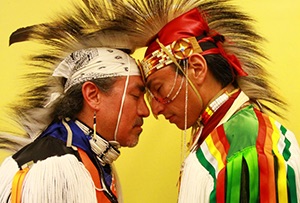

Note to some in the “Conservative Community” this story may be a trigger to some as it includes a history lesson on culture that predates European Colonialization of the Americas.
June is the the month of pride celebrations around the world for the LBGTQIA movement with celebrations, rememberances, parades and government recognition around the world.
Pride celebrations are held in large cities like Chicago, Manhattan and San Francisco and small towns such as Las Vegas and Truth or Consequences Pride Celebrations. Few Americans realize Pride celebrations occurred around the globe as they are not uniquely American; Barecelona, Madrid, London, Sydney, Mexico City, Buenos Aires, Berlin, Puerto Vallarta, Toronto, almost every Capital city in the world hosts Pride Activities.

Those that take offense, ignore it and move on as those events and celebrations had zero impact nor influence on your life. Just move on.
National Indigenous History Month
In Canada June or Junis is designated as National Indigenous History Month, a time to honor and celebrate the rich history, heritage, resilience, and diversity of First Nations, Inuit, and Métis peoples. This month, and specifically June 21st which is National Indigenous Peoples Day, is an opportunity to learn about and reflect on Indigenous history, cultures, and contributions as well as Pride Month
What is interesting and brilliantly accepting of Canadian Indigenous Culture is the Indigenous Communities have always supported the Gay Community and those that live outside the “norm” recognize those individuals classifying them as one of “two spirit.
Before colonization, many tribes had diverse ways of understanding gender, often recognizing individuals who embodied both masculine and feminine qualities.
Within some Indigenous languages, there are terms for individuals who embody both masculine and feminine qualities, like “Iikwekinazo” (a man functioning as a woman) and “Ininikinazo” (a woman functioning as a man) in Ojibwe.
Two-Spirit identities are distinct from LGBTQ+ identities, though they can and do overlap.

Spiritual and Cultural Significance of Two Spirit
Two-Spirit people often hold important spiritual and cultural roles within their communities within the tribes of the Indigenous people. Indigenous individuals who identified as Two-Spirit folks were seen as gifted and honoured in their community because they carried two spirits with them, both male and female. 2S folks were often the healers, medicine people, and visionaries within their given community and they were foundational members of their culture. Much of this can be attributed to the “double vision” 2S people are gifted with, being able to see both through the masculine and feminine lens.
Two-Spirit people, as well as all Indigenous peoples on Turtle Island, Canada’s first entry point to European Colonization were deeply impacted and harmed by the effects of colonization.
One major impact on 2S folks was the introduction of residential schools which forced extremely heteronormative roles onto Indigenous children. Colonization resulted in Two-Spirit folks losing their way of life and culture, and the effects of that are still very real today and should be brought to light.
Throughout the process of colonization and the devastating effects that came along with it, the respect and honour Two-Spirit folks had was lost and their roles diminished in society. The homophobic attitudes and ideas that are present in society have eroded the ways in which 2S folks are treated.
Closer to homd among the Navajo, Two-Spirit males often became weavers, usually women and men’s work, as well as healers, which was a male role. By combining these activities, they were often among the wealthier members of the tribe. Two-Spirit females engaged in activities such as hunting and warfare, and became leaders in war and even chiefs.
Gender variation. A variety of other traits distinguished Two-Spirit people from men and women, including temperament, dress, lifestyle, and social roles.
Spiritual sanction. Two-Spirit identity was widely believed to be the result of supernatural intervention in the form of visions or dreams and sanctioned by tribal mythology. In many tribes, Two-Spirit people filled special religious roles as healers, shamans, and ceremonial leaders.
Same-sex relations. Two-Spirit people typically formed sexual and emotional relationships with non-Two-Spirit members of their own sex, forming both short- and long-term relationships. Among the Lakota, Mohave, Crow, Cheyenne, and others, Two-Spirit people were believed to be lucky in love, and able to bestow this luck on others.
Most Indigenous communities have specific terms in their own languages for the gender-variant members of their communities and the social and spiritual roles these individuals fulfill; with over 500 surviving Native American cultures, attitudes about sex and gender can be very diverse. Even with the modern adoption of pan-Indian terms like Two-Spirit, not all cultures will perceive Two-Spirit people the same way, or welcome a pan-Indian term to replace the terms already in use by their cultures.
The disruptions caused by conquest and disease, together with the efforts of missionaries, government agents, boarding schools, and white settlers resulted in the loss of many traditions in Native communities. Two-Spirit roles, in particular, were singled out for condemnation, interference, and many times violence. As a result, Two-Spirit traditions and practices went underground in many tribes

Today, lesbian, gay, bisexual, and transgender native people throughout North America are reviving the Two-Spirit role and its traditions. National gatherings of Two-Spirit people have been held since the early 1990s, and regional gatherings are held in many parts of the country thus the two cultures celebrate in tandem with each other during the month of June and every month understanding thst difference is acceptable and actually a social norm.
June a Month of Diverse Celebrations
If all of this is just to much for you,
June has many other Celebration Days of which you msy hang your hat….
- Wednesday Jun 1: Say Something Nice Day
- Thursday Jun 2: Leave the Office Early Day
- Friday Jun 3: Repeat Day
- Friday Jun 3: National Doughnut Day
- Saturday Jun 4: Hug Your Cat Day
- Monday Jun 6: Drive-In Movie Day
- Tuesday Jun 7: VCR Day
- Wednesday Jun 8: Best Friends Day
- Thursday Jun 9: Donald Duck Day
- Friday Jun 10: Iced Tea Day
- Saturday Jun 11: Corn on the Cob Day
- Sunday Jun 12: Red Rose Day
- Monday Jun 13: Sewing Machine Day
- Tuesday Jun 14: Bourbon Day
- Wednesday Jun 15: Nature Photography Day
- Thursday Jun 16: Bloomsday
- Friday Jun 17: Eat Your Vegetables Day
- Saturday Jun 18: World Juggling Day
- Saturday Jun 18: International Picnic Day
- Saturday Jun 18: International Panic Day
- Sunday Jun 19: Sauntering Day
- Tuesday Jun 21: Daylight Appreciation Day
- Wednesday Jun 22: Onion Ring Day
- Thursday Jun 23: Typewriter Day
- Friday Jun 24: Take Your Dog to Work Day
- Friday Jun 24: Swim a Lap Day
- Saturday Jun 25: Please Take my Children to Work Day
- Sunday Jun 26: Chocolate Pudding Day
- Monday Jun 27: Helen Keller Day
- Tuesday Jun 28: Tau Day
- Wednesday Jun 29: Camera Day
- Thursday Jun 30: Meteor Watch Day
Commentary:
My favorite of days in June was Wednesday Jun 1: Say Something Nice Day and of course Hug Your Cat Day.
If I were a betting man, this article will provoke a variety of reactions depending upon the platform it is read upon, given we disperse news and commentary on a variety of platforms and channels to a diverse audience
If the reader has gotten this far, and is fuming with negative thoughts, I reference “Say Something Nice Day,” if you can’t say something nice sometimes it’s best to say or “post” nothing at all.
Until next time be safe, be tolerant, be open, be respectful to one another brothers and sisters…
More News from Alamogordo
- Secretary Hegseth Orders Harvey Milk’s Name Removed from Naval Ship Civil Rights pioneer Harvey Milk’s legacy under attack by Trump adminstration


Leave a Reply